This 2026 report reviews the PU leather market from a buyer’s point of view, covering demand drivers, product uses, quality checks, pricing factors, and sourcing tips for global procurement teams.
PU leather shows up in more places than many of us notice: the office chair we sit on, the handbag we carry, the sofa in a rented apartment, or the car seat cover that has to survive daily use. In 2026, the PU leather market is still shaped by one simple question buyers keep asking: how do we balance appearance, comfort, cost, and durability without making the product feel disposable?
Definition
What is the PU leather market? It is the global market for polyurethane-based synthetic leather used in furniture, fashion, automotive, luggage, and consumer goods, driven by price sensitivity, design needs, and changing sustainability expectations.
- PU leather is widely used because it offers a leather-like look at a lower cost.
- Buyers care about hand feel, surface durability, and how the material ages in real life.
- Furniture, fashion accessories, and automotive interiors remain the strongest demand areas.
- Water resistance, easy cleaning, and color consistency often matter more than technical specs on paper.
- Sourcing decisions are increasingly influenced by compliance, chemical safety, and sustainability claims.
What the 2026 market looks like
For global buyers, 2026 feels less like a single market and more like several demand stories happening at once. In home furnishing, customers want soft-touch materials that look premium in photos and still clean easily after family life happens. In fashion, the focus is on color variety, seasonal trends, and a finish that does not crack too quickly. In automotive and travel goods, consistency and long-term wear matter most.
The market is also becoming more segmented. Standard PU leather still serves price-driven categories, but more buyers now ask about water-based PU, low-VOC formulations, and recycled or bio-based inputs. That does not mean every customer is willing to pay a large premium. It does mean procurement teams need to separate marketing language from actual performance data.
Where demand is coming from
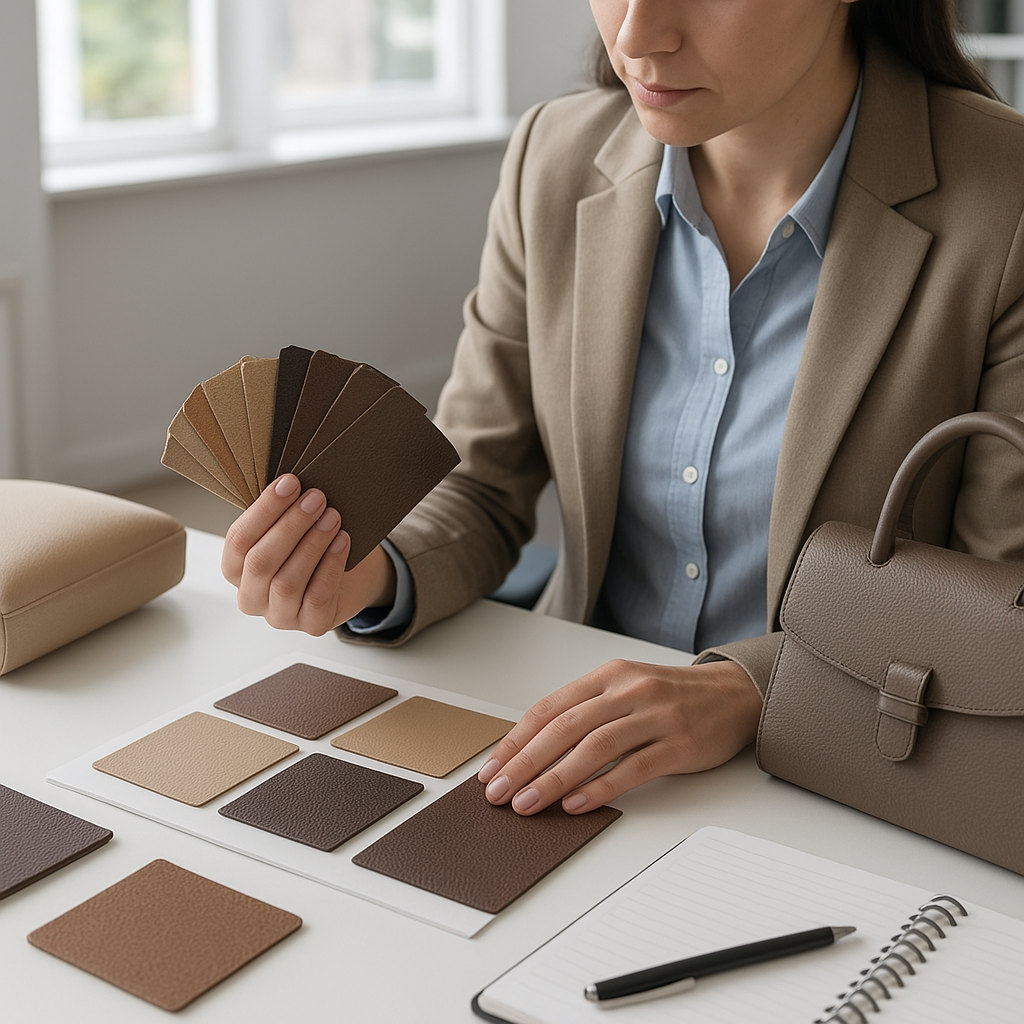
Most demand still comes from furniture, upholstery, bags, footwear, and automotive interiors. The reason is practical: PU leather fits products that need a polished look without the price and maintenance burden of natural leather. For e-commerce sellers, it is also easier to present online because color, texture, and finish can be controlled more consistently across batches.
We are also seeing stronger interest from smaller lifestyle brands. A startup selling home office chairs, for example, may choose PU leather because it photographs well, ships efficiently, and gives the customer a “finished” look right away. That kind of everyday usefulness keeps the category relevant even when raw material prices or freight costs move around.
Traditional PU leather vs newer material directions
| Feature | Traditional PU Leather | Modern PU Leather Direction |
|---|---|---|
| Surface feel | Basic leather-like appearance | More refined soft-touch and grain control |
| Environmental profile | Often solvent-based production | More water-based, lower-emission options |
| Buyer focus | Mainly cost and appearance | Cost plus compliance and sustainability |
| Durability | Adequate for general use | Improved abrasion and crack resistance |
| Market positioning | Mass-market applications | Broader use in premium-looking consumer goods |
How buyers can evaluate suppliers
- Step 1: Ask for the exact application first. A sofa, a tote bag, and a car seat do not need the same PU leather specification.
- 步骤 2: Request physical samples and test them under real use conditions, not only in showroom lighting.
- Step 3: Check abrasion, peeling, color fastness, and cleaning performance before discussing volume.
- 步骤 4: Confirm compliance documents, especially for restricted substances and market-specific requirements.
- Step 5: Compare lead time, batch consistency, and after-sales response, because supply reliability matters as much as price.
A useful habit is to think like a customer, not only like a buyer. If the end user is a parent wiping down a dining chair after dinner, the surface has to clean easily. If it is a commuter carrying a bag every day, the corners must resist wear. If it is a brand selling online, the texture must look trustworthy in photos. These small details often decide repeat purchases.
External research worth reading
For a broader view of synthetic leather, sustainability, and material innovation, these sources are useful starting points. They help buyers compare market claims with research and industry reporting.
Google Scholar – polyurethane synthetic leather market research
Semantic Scholar – polyurethane leather sustainability studies
Ahrefs Blog – content strategy perspectives for product research pages
Search Engine Journal – SEO and content discovery trends